The future of ai search rewards businesses with accurate, complete local data. Here are five habits to fix now so your listings hold up long term.
If you have ever wondered why a customer searching for "plumber open now near me" ends up calling three competitors instead of you, the answer is probably not your prices or your reviews. It is that your business information does not answer the actual question being asked. The future of ai search is not about chasing another algorithm update. It is about making sure your local presence can hold up no matter how the search results keep changing shape around it.
We work with small businesses across a range of industries, and the pattern we see over and over is the same. Owners react to whatever changed last month instead of building a foundation that survives the next five changes. Below are five habits worth fixing now, based on what is actually happening in local and AI search today.
Search behavior has shifted from short keyword phrases to longer, more conversational questions. Instead of "hair salon Denver," people are asking whether a specific salon has a Saturday opening, offers a certain treatment, and is near their office. AI search tools try to break that kind of question into parts and match each part to real business data.
That means a listing with just a name, address, and hours is no longer enough. If your business profile cannot answer the specific version of the question, a competitor's profile probably will, even if your business is the better fit. This is also why why AI search rankings don't require separate optimization matters so much right now. AI answers are pulled from the same signals that drive your regular search rankings, so there is no shortcut around doing the fundamentals well.
A lot of business profiles are set up once and never touched again. That worked fine when local search mostly returned a list of ten blue links. It does not work when AI features are trying to match specific services, availability, and amenities to a specific question.
None of this guarantees a spot in an AI-generated answer. But it removes the most common reason a qualified business gets skipped over: missing or vague information.
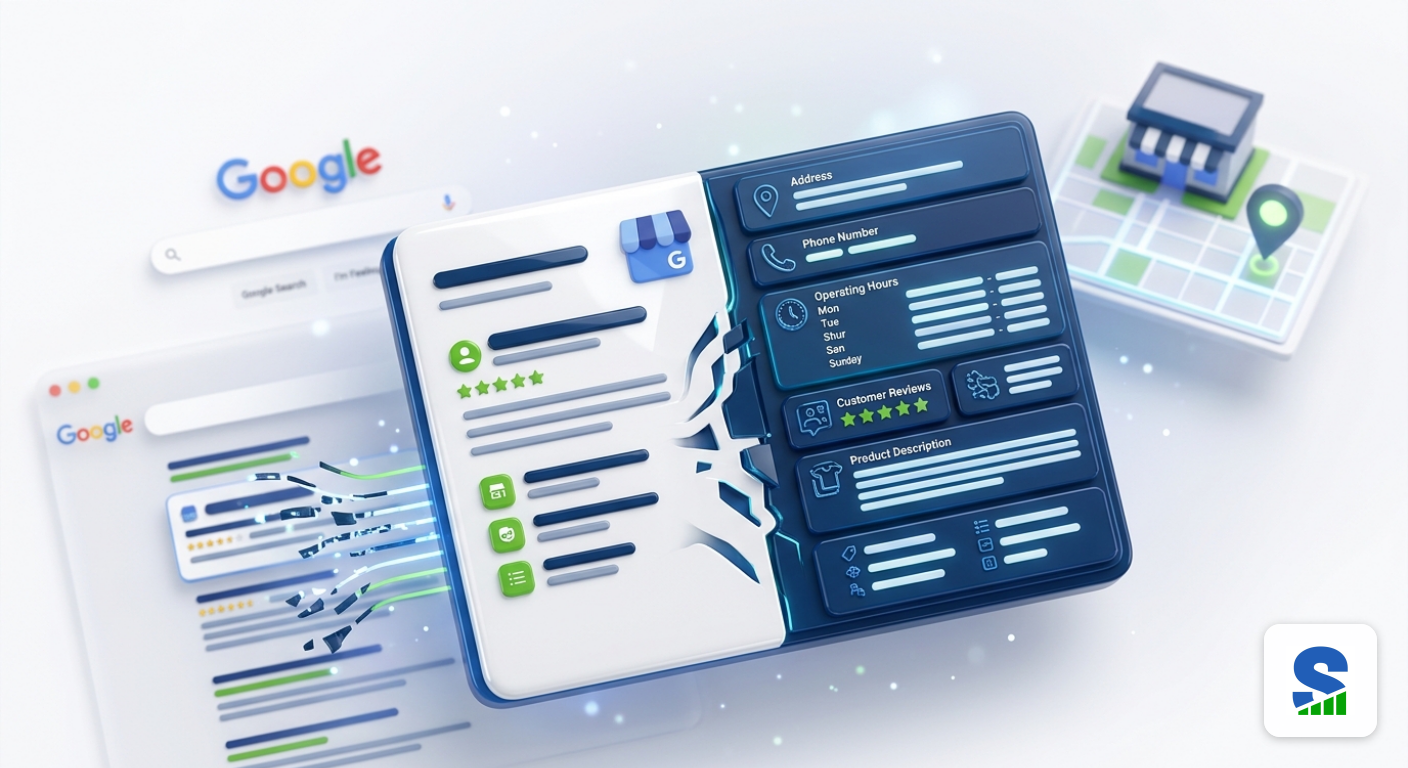
If your business has more than one location, this habit matters even more. A strong brand-level web presence does not tell an AI system that your Westside branch specifically offers weekend appointments or has wheelchair access. Each location has to carry its own accurate information.
Consistency does not mean every location needs identical wording. It means a customer or an AI system should never run into conflicting facts between your website, your Google Business Profile, and any other place your information lives. A location-by-location audit is worth more here than assuming one polished national profile covers every store.
This is also where the competitive picture gets tighter. AI tools tend to surface only a small handful of businesses per query rather than a long list, so understanding how AI assistants narrow local business recommendations can help you spot exactly which gaps are keeping a location off that short list.
Reviews carry information your own profile cannot supply, because they come from real customers describing real experiences. A pattern of unanswered reviews, or reviews that surface confusion about services, hours, or pricing, is a signal worth paying attention to.
Responding to reviews regularly does two things. It gives potential customers current, human confirmation that the business is active and attentive, and it gives your team a running list of the specific details customers are confused about, which often points to gaps in your listed information.
Reusing a promotion or an offer across multiple locations is fine. Reusing it word for word, with no local detail attached, is a missed opportunity. A generic offer tells a search system nothing about which location is relevant to a specific searcher.
Adding neighborhood references, location-specific images, or details about what makes that particular branch different gives both customers and AI systems something concrete to match against. This same principle shows up in a broader survey of ranking factors, which is a good reminder that the basics of strong content still carry more weight than most people assume. We have written before about a survey confirming content and links remain ranking drivers, and localized, specific content is really just that principle applied at the neighborhood level.
Managing hours, categories, services, and updates across several locations by hand does not scale. Automation and templated processes can help a lot here, flagging missing fields or outdated hours before they become a problem.
What should not be automated away is judgment. Decisions about brand-sensitive claims, unusual complaints, or exceptions to standard policy still need a person behind them. The goal is a system where humans set the standards and guardrails, and automation handles the routine checking against those standards.
It is tempting to look for a single metric that proves a post or a profile update caused a specific AI-generated answer to mention your business. That direct causal link mostly does not exist yet, and chasing it is a distraction.
A more useful approach is comparing the kinds of questions customers actually ask about your business and your competitors against the answers currently showing up in search, then tracking that alongside your profile engagement and real business outcomes over time. Doing this at the individual location level, rather than only at the brand level, is what turns this from guesswork into an actual strategy.
Building a local search presence that holds up as AI search keeps evolving takes more than a one-time listing update. Our website audits and SEO services are built around exactly this kind of foundation work, and our Next Gen Search Framework is designed to keep your business visible as search behavior shifts. If you want a clear look at where your gaps are, we are happy to talk through what a location-by-location audit would look like for your business.