The google spam update september 2026 rollout takes up to two weeks. Here's what to track in Search Console and why ongoing compliance beats scrambling.
If you manage your own website or oversee marketing for a small business, you have probably learned to brace yourself every few months when Google announces another spam update. The google spam update september 2026 rollout is different from the three that came before it this year, and the difference is worth understanding before you start second-guessing every ranking fluctuation.
This is the fourth spam update Google has pushed out in 2026, following updates in March, June, and August. What sets the September release apart is not what it targets, since Google has not disclosed specifics, but how long it is taking to finish. That timeline changes what you should be watching for and when you should actually act.
Each of the earlier 2026 spam updates wrapped up in a matter of days. March finished in under a day, June took just over two days, and August took roughly two and a half days. September is different. Google has said this rollout may take up to two weeks to complete, which is a much wider window than small business owners are used to planning around.
A longer rollout does not necessarily mean a bigger or more aggressive update. It simply means Google's systems are processing changes more gradually this time. But for anyone watching their traffic and rankings, two weeks of potential movement is a long stretch to sit through without a plan.
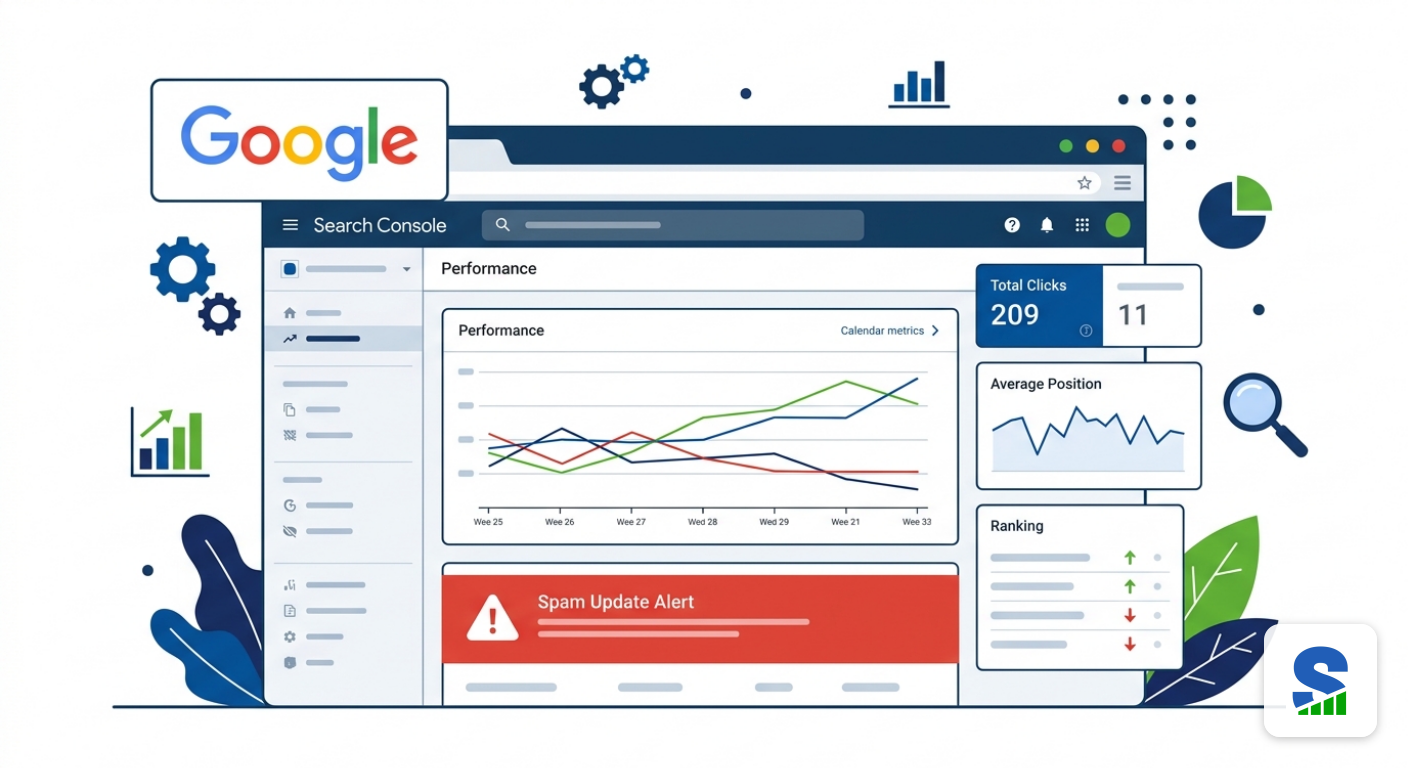
The instinct when rankings dip is to assume something has broken and start making changes immediately. That instinct usually causes more harm than good, especially during a rollout that could still be shifting for another week or more. Before touching anything on your site, the better move is a calm review of Search Console data and how your current traffic compares to your historical baseline. If you want a longer walkthrough of how to approach that first check without overreacting, we laid out the process in detail in our piece on calm review of Search Console data after a ranking drop.
Because this rollout is stretched over two weeks, a dip in week one does not necessarily mean the update is finished having its effect on your site. Give it time before drawing conclusions, but keep watching daily rather than checking in once a month.
Small businesses that treat each spam update as an isolated event tend to fall into the same pattern. They panic when rankings move, make a batch of hasty changes, calm down once things stabilize, and then repeat the cycle a few months later when the next update rolls out. With four updates already in 2026, that pattern is exhausting and it rarely produces lasting results.
Google has been direct about how recovery actually works. Sites that adjust their practices to comply with spam policies may see improvement, but only after Google's automated systems observe compliance over a period of months. There is no fast fix available after a spam update hits. The sites that come through these updates in good shape are usually the ones that were already following the policies before the update ever rolled out.
We covered this in more depth when the August 2026 update finished rolling out, including what the August spam update actually penalizes versus what it leaves alone, like most link spam issues. Many of those same principles apply here, since Google has not indicated that September targets something entirely new.
The businesses that handle these updates well are not the ones scrambling for two weeks every time Google announces a rollout. They are the ones running regular website audits as a matter of course, checking for thin or duplicate content, unnatural link patterns, cloaking, and other spam policy issues long before an update ever forces the question.
This maintenance mindset extends beyond content and links. A site that has been compromised or has outdated security practices can end up flagged for reasons that have nothing to do with your actual content strategy. If your last audit focused purely on keywords and page structure, it is worth expanding that scope. We put together a security audit checklist for small business websites that covers the kind of vulnerabilities that can quietly undo months of ranking progress, and it is a useful companion to any spam policy review.
Ongoing maintenance also means you are not starting from zero every time Google announces an update. If your site already reflects sound SEO practices, a two-week rollout window becomes something to monitor calmly rather than something to fear.
We built our Next Gen Search Framework around this exact philosophy: measurable, ongoing SEO work rather than reactive scrambling after every algorithm change. If you want a second set of eyes on your current standing, our website audits look at content quality, technical health, and lead generation performance together, so nothing falls through the cracks during a rollout like this one. Reach out to us if you would like help reviewing your Search Console data or building an SEO maintenance plan that holds up through the next update, whenever it comes.