
demolition SEO · Nationwide
Demolition SEO Services
Inquiries from owners, investors and builders who have already decided something has to come down. We help demolition contractors rank for teardowns, interior gut work, commercial strip-outs and structure removal, with pages that answer the permit, asbestos and disposal questions behind every call.
If you found this page by searching, your customers are doing the same thing. Helping them find you is what we do.
- Dozens of 5-star Google reviews
- 20 years ranking businesses
- 200+ active clients
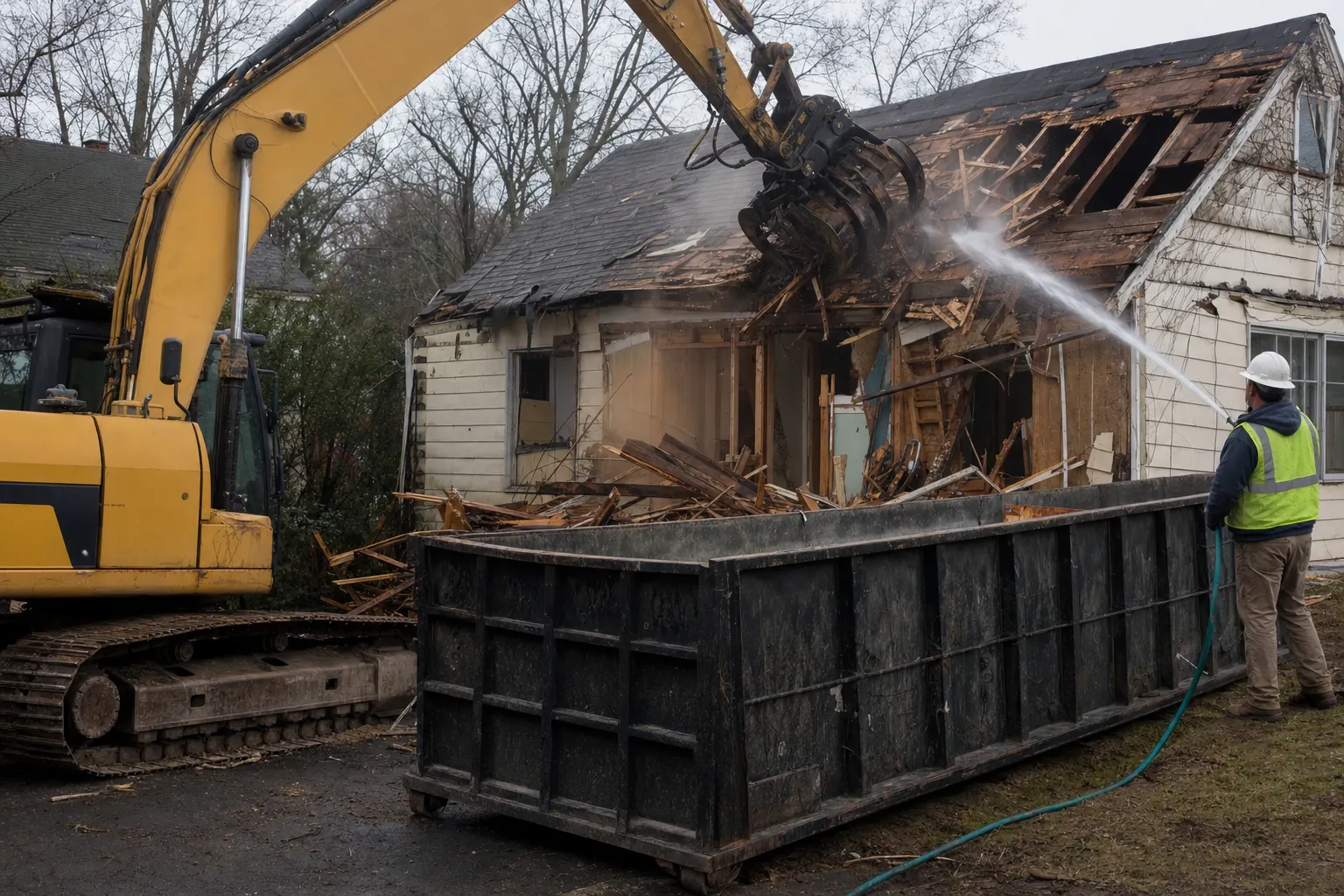
How buyers search
How people search for a demolition contractor
Demolition is usually the first step of someone else's project, and the person searching is rarely an expert. A couple who bought an old house to replace it, an investor with a fire-damaged rental, a homeowner whose kitchen remodel starts next month, a church taking down a failing outbuilding: each has a different reason and a different budget. What they share is uncertainty. They do not know which permits apply, whether the structure contains asbestos, who disconnects the utilities or where all the debris ends up.
The searches split by scale. Residential teardown buyers look for house demolition cost and ask what happens to the foundation, the driveway and the trees. Interior demolition customers, often homeowners or remodelers, want a kitchen, bathroom or basement gutted without damaging the rest of the house. Small structure removal covers garages, sheds, decks, pools and old concrete. Commercial customers search for interior strip-outs ahead of a new tenant, selective demolition inside an occupied building and full building removal on redevelopment sites.
Commercial and builder buyers behave like procurement teams. General contractors, developers and property owners compare demolition contractors on licensing, insurance limits, safety record, equipment, abatement partnerships and recycling practices. They often need documentation for permits, disposal and salvage. A demolition company that wants this work needs pages that state those credentials plainly, because a builder working to a schedule will move on quickly from a site that only shows an excavator knocking down a wall. Bid invitations often go only to the contractors whose credentials are easy to verify online.
Fear drives every demolition decision. Owners worry about hazardous materials, a neighbor's fence or foundation getting damaged, fines for a missed permit, and a cleared lot left full of buried debris. They trust contractors who explain the order of operations: surveys and testing, permits, utility disconnects, abatement if needed, the teardown, hauling, recycling and final grading. Reviews that mention a clean lot, no damage next door and smooth dealings with the city carry far more weight than generic praise.
What we do
SEO for demolition contractors, everywhere buyers look
Google Maps
The local map pack
Homeowners and small property owners start with a map search, often "demolition contractor near me" or "house demolition", and they judge quickly from the profile. We set categories for demolition and any related services you offer, such as interior demolition or concrete removal, and list each one. Photos show your equipment, crews in proper safety gear, careful selective work and clean finished lots, rather than only dramatic collapses. We build reviews from homeowners, investors and builders, prompting them to mention permits handled, neighbors protected and the site left clean. Posts show recent projects by type, from a single shed to a full teardown. Since demolition crews travel, we align your service area and site so Google understands the full region you cover, not just the area around the yard where the roll-off containers sit.
Organic search
The blue links below the map
Organic search wins the larger and more considered demolition jobs. We build pages for each kind of work: residential teardowns, interior and selective demolition, kitchen and bathroom gut work, garage and shed removal, deck removal, swimming pool removal, concrete and driveway removal, and commercial strip-outs. A process page explains testing, permits, utility disconnects, abatement coordination, debris handling and site restoration in order, which is the page most owners need before they call. A cost page explains what changes the price. A separate section speaks to builders and developers with licensing, insurance, safety and recycling details. Project pages describe real jobs and the constraints involved. Authority comes from builders, remodelers, real estate investors, abatement partners and local business groups who genuinely work with you. Each project page links back to the matching service, so proof and explanation sit together.
AI search
AI Overviews, ChatGPT, Gemini
People now ask AI assistants how much it costs to tear down a house, whether they need an asbestos test before demolition, how long a teardown takes and who in the area does it well. Those answers come from review sites, contractor directories, local business listings and pages that answer clearly. We put your company into those sources and structure your process and service pages so an assistant can explain them accurately and cite you as the source. When an investor or homeowner asks for a demolition contractor who handles permits and recycles what it can, the goal is for the answer to include your name and the reasons to choose you. We track which assistants mention you over time and strengthen the sources behind the answers that leave you out.
Your first 90 days
What happens after you say go
- 1
Month one: audit and buyer mapping
We audit your site, your Google Business Profile and the demolition contractors appearing for teardown, interior and commercial searches in your region. Then we map your services to four buyer types, homeowners, remodelers, investors and commercial builders, and decide which pages each one needs. Technical problems get fixed, categories and service areas are corrected, and the gaps become clear, which usually means missing process, permit and small structure removal pages. We also look at which removal jobs you turn down today, since some of those searches may be worth capturing, and we note which remodelers, investors and abatement firms already refer you, because they anchor the authority work later.
- 2
Month two: process, permit and service pages
The process page goes live first, covering testing, permits, utility disconnects, abatement and disposal in order. Service pages follow for teardowns, interior gut work and the small removals that bring steady calls, such as sheds, decks, pools and concrete. Recent projects become written case pages. Review requests go out at the end of each job, and directory listings are cleaned up so your name, license details and phone match everywhere an owner or builder might check. A cost page explaining what moves the price of a teardown goes live alongside them, and interior demolition pages explain dust control and protecting finished rooms.
- 3
Month three: commercial reach and authority
The builder and commercial section goes live with insurance, safety and recycling information. Authority building starts through remodelers, builders, investor groups, abatement partners and local business organizations. We get your company into the directories and lists AI assistants consult. The monthly report separates residential calls from commercial requests and shows which service pages bring in each, so you can see which kinds of demolition work search is producing. Small removal pages get fresh project photos each month to keep them climbing, and we shift effort toward the job mix you prefer.
Timing
What triggers a demolition search
Demolition is not seasonal in the usual way. It is triggered by events in other people's projects, so the search comes before the remodel, the rebuild or the sale, and you need to be visible at the moment that decision gets made.
A purchase made to rebuild
Buyers of older homes on valuable lots search for teardown costs before and right after closing. The contractor who explains the process clearly often gets the job and the introduction to the builder.
Remodel kickoffs
Kitchen, bath and basement remodels usually start with interior demolition. Homeowners acting as their own general contractor search for gut work a few weeks before the cabinets arrive. Interior gut work is often booked within days.
Fire, storm and condemnation
Damaged and condemned structures create urgent demolition needs, often with insurance or city deadlines attached. Owners search fast and favor contractors who explain the paperwork plainly. Clear notes on insurance documentation help here.
Lease turnover and spring starts
Builders and developers line up demolition ahead of spring starts. Commercial strip-outs follow lease cycles, when one tenant moves out and the next plans a build-out on a tight schedule.
The math
What one new customer is worth to you
A demolition customer often leads to more work than the first job, through remodelers, investors and builders who keep coming back. This is example math, so replace it with your own job averages to see what one lead from search could be worth.
At those numbers, the small interior job that introduces you to an investor or remodeler can turn into a steady pipeline of teardowns. That is why we track what kind of buyer each lead is: a homeowner, an investor or a builder.
Example math · use your own numbers
- Interior gut for a remodel
- $6,000
- House teardown for the same investor
- $25,000
- Two more investor projects
- $50,000
- Referral to a builder
- $25,000
- Example lifetime value
- $106,000
Search terms
Searches we target for demolition contractors
We pick demolition terms by the buyer and the scale of the job. Teardown and cost terms reach owners planning to rebuild, interior and gut terms reach remodelers, removal terms bring steady smaller jobs, and commercial terms bring builders. Each demolition term is assigned to exactly one page.
- demolition contractor near me
- house demolition cost
- residential demolition company
- interior demolition contractor
- kitchen demolition
- shed removal
- swimming pool removal
- concrete removal
- commercial demolition contractor
- selective demolition
- teardown and rebuild
- mobile home demolition
Demolition SEO questions we hear most
Our buyers do not know what they need. How should our site handle that?
Lead with the process. Most people searching for demolition have never hired a demolition contractor and do not know where permits, testing, utility disconnects and disposal fit. A clear page that walks through each step in order, with what the owner needs to do and what you handle, answers the questions they are afraid to ask. It also cuts down the time your estimator spends explaining the basics on every call.
Should we talk about asbestos and hazardous materials on our website?
Yes, carefully and accurately. Owners of older buildings search for asbestos testing before demolition, and they want to know who handles it. If you work with licensed abatement partners, say so and explain how the handoff works. Avoid claims about anything you are not licensed to do. A plain explanation of when testing is required and what happens if materials are found builds trust before the first site visit. It also gives AI assistants a reliable answer to cite.
Is it worth ranking for small jobs like shed and deck removal?
Often, yes. Small removals bring steady calls between larger projects, they come from people who will remember you when they renovate or sell, and the searches are easier to win than teardown terms. Each type, such as sheds, decks, pools, concrete and outbuildings, deserves its own page because people search for each separately. We weigh this against your crew capacity so the pages fill gaps instead of crowding the schedule.
How do we reach general contractors and developers?
Give them a section written for procurement. List your licensing, insurance limits, safety program, equipment, recycling practices and the kinds of commercial and selective demolition you handle. Builders read that information before inviting a sub to bid. Project pages from real commercial work, with scope and duration, support it. Listings in contractor directories and builder associations put you where they already look when a job needs a demolition sub. Builders also notice reviews that mention schedules kept.
Do recycling and disposal practices matter to customers?
More than many demolition contractors expect. Commercial owners and developers often have recycling requirements or green building goals, and homeowners like knowing their old house is not all going into a landfill. A page that explains how you separate concrete, metal and wood, and what gets salvaged, answers that question and gives AI assistants a reason to name you when someone asks about responsible demolition. It also helps when bidding for public or institutional work.
How do we compete with excavation companies that also do demolition?
Show the depth they usually do not. Many excavators list demolition as one line on a services page. A demolition contractor with pages on interior and selective work, permits, abatement coordination and commercial strip-outs is more relevant to every specific search. Reviews describing careful work beside occupied buildings reinforce that. If you also handle site work after the teardown, say so, because many buyers prefer one contractor for both. That is usually enough to win the specific demolition searches.
Should we publish pricing for teardowns?
Ranges and the factors behind them help. House demolition cost is one of the first things owners search. Explaining what moves the price, such as size, construction type, basement, hazardous materials, access, permits and dump fees, sets realistic expectations and filters out inquiries that were never viable. You do not have to give exact numbers. Most owners just want to know whether the project falls in the range they imagined.
How long before demolition SEO brings calls?
Map and profile fixes often bring movement in the first couple of months, especially for removal and smaller residential work. Teardown and commercial terms usually take several months. It depends on your region, your site history and the competition. Because demolition follows other people's projects, results can arrive in uneven bursts. We report calls and requests by service and buyer type every month so the trend stays clear. A single investor relationship can change the picture quickly.
Related industries we rank
demolition SEO
See where you stand before your competitors do
Get a free audit of your site and map listing, with a clear plan for turning more demolition searches into booked work.
Get Your Free SEO AuditFree audit, no contracts.