excavation SEO · Nationwide
Excavation SEO Services
Calls from landowners getting ready to build and from builders who need a dependable dirt crew. We help excavation contractors rank for land clearing, grading, site prep, trenching and drainage work, so the people planning a project find you before your equipment schedule fills.
If you found this page by searching, your customers are doing the same thing. Helping them find you is what we do.
- Dozens of 5-star Google reviews
- 20 years ranking businesses
- 200+ active clients
How buyers search
How excavation work actually gets found
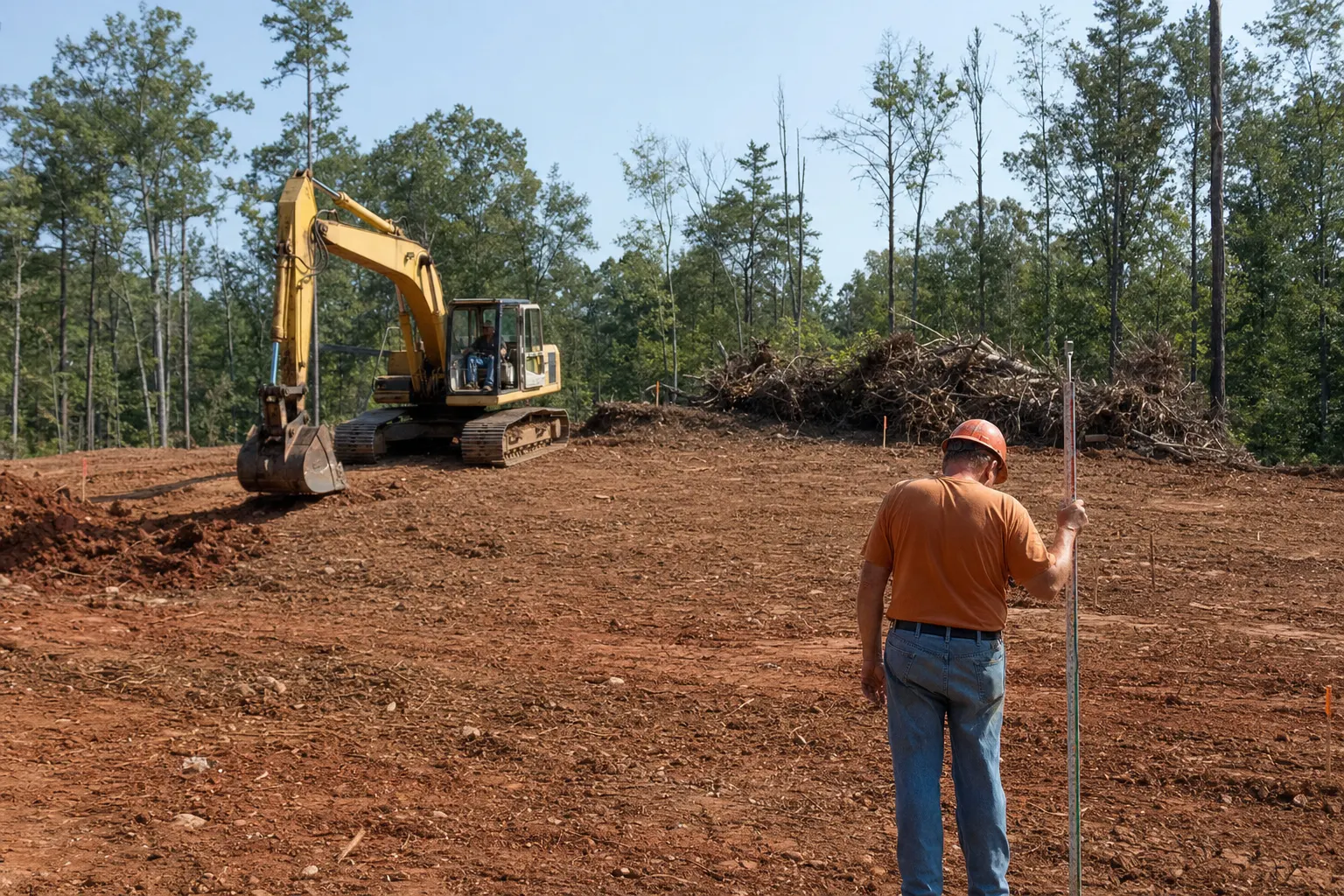
Excavation customers rarely know the right words for what they need. A family that just bought five acres to build on searches for "clear land for a house", "how to put a driveway on raw land" or "cost to level a lot", not "site work contractor". A homeowner with water in the basement types "yard drainage fix". Contractors who write pages in the customer's language rather than the trade's catch searches that competitors with a single excavation services page never see, and those searches are often far less contested.
Landowners are the largest private audience, and they are usually early in a long project. They need clearing, a building pad, a driveway cut, a septic system dug, water and power trenched in, and final grading for drainage, roughly in that order. They worry about cost, about hitting rock, and about choosing someone who will leave the site a mess before the builder arrives. A contractor who explains the sequence and coordinates with the surveyor, the septic designer and the builder becomes the first call on the whole project.
Builders, general contractors, developers and pool builders make up the business audience. They search for excavation subcontractors when their usual crew is booked or unreliable, and they judge you on equipment, capacity, schedule and insurance. Municipal and utility work adds another layer, with bid lists and prequalification. Each audience needs its own pages, because a superintendent scanning for machine sizes and crew availability reads very differently from a landowner trying to work out what a perc test is.
Trust in excavation is about competence underground. Buyers worry about hitting utilities, about fill that will not compact, about erosion, permits and a neighbor complaining about mud in the road. They look for evidence that you call for locates before you dig, handle erosion control, understand local soil and know the permitting process. Photos of real equipment on real sites, clear explanations of the process and reviews that mention a clean, well-graded finish make that competence visible before anyone climbs into a machine.
What we do
SEO for excavation contractors, everywhere buyers look
Google Maps
The local map pack
Excavation contractors often run from a yard on the edge of town and serve a wide rural radius, which makes the map pack tricky. We set primary and secondary categories that match the work you want, such as excavating, grading and land clearing, and list each service in the profile. A service area that reflects the counties you actually cover keeps you visible where landowners are buying. Photos of machines working real sites, finished building pads, cleared lots and new driveways replace the empty profile most dirt contractors run. We ask for reviews at the end of each job, prompting customers to describe the work and how the site was left. Profile posts show recent projects by area, which reinforces where you work to both Google and the landowner scrolling the results on a lunch break.
Organic search
The blue links below the map
Organic search reaches the landowner during planning and the builder looking for a sub. We build pages for each service, written in the words customers actually use: land clearing, lot clearing for a new home, building pad preparation, driveways on raw land, utility trenching, septic excavation, drainage and grading, basement and foundation digs, and pond work. A page that explains the site preparation sequence, from survey stakes to final grade, ties them together and is often the most valuable page on the site. A separate section addresses builders, developers and pool builders with equipment lists, capacity and insurance. Project pages show real sites with the scope and the conditions you faced. Authority comes from builders, surveyors, septic designers, land agents and local business groups who know your work. Each project page links to the matching service page.
AI search
AI Overviews, ChatGPT, Gemini
People buying land increasingly ask AI assistants what it costs to clear a lot, what site prep a new house needs, whether a parcel needs a perc test and who in the area does that kind of work. The answers come from directories, local business listings, review sites and pages that give direct, factual explanations. We get your company into the sources those assistants draw on, including contractor directories and land-focused resources, and we write your service pages so an assistant can explain your process and cite you by name. When someone asks for an excavation contractor who knows the local soil, the setbacks and the permit office, the aim is for your name to be in the answer, along with the kinds of sites you handle best. Over time we test land and site prep questions in the major assistants to see whether you are named.
Your first 90 days
What happens after you say go
- 1
Month one: audit and plain-language mapping
We audit your site, your Google Business Profile and the contractors showing up for excavation, grading and land clearing searches across your counties. Then we translate your services into the words landowners and builders actually type, which is usually where the biggest gap sits. Technical problems get fixed, categories and service areas are corrected, and every service gets a planned page. You finish the month knowing which searches you already appear for and which jobs are quietly going to competitors. We also note which builders and land agents already send you work, because they shape the authority plan in month three.
- 2
Month two: land and site prep pages
We publish the pages that catch landowners early: land clearing, building pads, driveways on raw land, utility trenching and drainage, plus the site preparation sequence page that ties them together. Project pages from recent jobs go up with real detail about the terrain and the scope. Review requests move to the end of each job. Listings in contractor directories and local business sites get cleaned up so your name, phone and service area match everywhere. Pond, basement and foundation dig pages come next if you want that work, each written in the plain words owners use.
- 3
Month three: builders, authority and AI visibility
The builder and developer section goes live with your equipment, capacity and insurance details. Authority building starts through surveyors, septic designers, builders and land agents who have reason to mention you. We place your company in the directories and lists AI assistants consult. The monthly report separates landowner leads from builder and commercial requests, so you can see which side of the business search is growing and where more effort would pay off. Municipal and utility work gets its own page if you hold the prequalifications for it, and drainage pages are refreshed before the wet season.
Timing
When excavation demand builds through the year
Excavation follows ground conditions, permits and land sales. Frozen or saturated ground stops work in many regions, and most projects are planned months ahead, so your visibility needs to be in place before the digging season opens.
Land purchases and closings
A closing on raw land starts a chain of site work. Buyers search for clearing, driveways and building pads within weeks, and the contractor they find first often handles every phase that follows.
Ground firming up in spring
When the ground firms up, builders and landowners who planned over winter all want to start at once. Contractors already ranking get their pick of the work and set their own schedule.
Heavy rain and washouts
Storms expose poor grading, wet basements and washed-out driveways. Drainage and regrading searches spike after big rains, often from homeowners who never expected to need an excavator. Many of those calls turn into larger regrading jobs.
Busy permit cycles
When local permit activity climbs, builders need more dirt crews than they have. Searches for excavation subcontractors rise, and reliable newcomers get added to the rotation for years. Being easy to find matters most then.
The math
What one new customer is worth to you
An excavation customer is often a whole project rather than a single task, and builders come back again and again. This is example math. Substitute your own job averages to see what one landowner or builder found through search could be worth.
At those numbers, a single land clearing call can lead to the full site package and an introduction to a builder who keeps sending work. That is why we track where each lead started, not just how many calls arrived in a month.
Example math · use your own numbers
- Land clearing for a homesite
- $8,000
- Building pad, driveway and grading
- $15,000
- Septic dig and utility trenching
- $9,000
- Repeat work from the builder on that house
- $40,000
- Example lifetime value
- $72,000
Search terms
Searches we target for excavation contractors
We pick excavation terms in two languages: the plain words landowners use and the trade terms builders use. Land and drainage terms bring private projects, while site work and subcontractor terms bring builder relationships. Every term is assigned to one page, so nothing on the site competes with itself.
- excavation contractor near me
- land clearing services
- lot clearing cost
- site preparation for new home
- grading and excavating
- building pad preparation
- gravel driveway installation
- utility trenching
- yard drainage contractor
- basement excavation
- excavation subcontractor
- pond digging
Excavation SEO questions we hear most
Our customers do not search for "excavation". How do we reach them?
By writing in their words. Landowners search for clearing a lot, putting in a driveway, leveling a yard or fixing water that pools against the house. Builders search for site work and subcontractors. We map your services to both vocabularies and build pages that match each, so you appear for searches a single excavation services page would miss. The phrasing landowners use is often less contested, which makes those pages quicker to rank.
Most of our work comes from builders. Is SEO worth it?
It can be, especially for adding new builders and reducing dependence on a few. Builders and developers look for subcontractors when they expand into new areas or their usual crew is overbooked. A section with your equipment, capacity, service area and insurance gives them what they need to shortlist you. Landowner searches then add a second stream of private work that does not depend on any one builder's schedule or cash flow.
We cover a big rural area. Can we show up across all of it?
Partly. The map pack favors searches near your address, so outlying areas are harder there. Organic results reach much further, and pages built around real projects in each county or town, describing the terrain and the work, give Google a reason to show you there. We prioritize the areas where land is selling and where your equipment can travel economically, then expand from there as the pages start bringing calls.
Should we publish pricing for land clearing or grading?
Ranges and the factors behind them help a lot. Landowners have no idea whether clearing an acre costs a little or a lot, and that is the first thing they search. A page that explains what moves the price, such as tree density, stumps, slope, rock, access and disposal, sets realistic expectations and filters out projects that will not work. You do not need exact numbers, and many contractors prefer to show the factors alone.
How do we show we can be trusted on someone's land?
Show the work and the care behind it. Photos of real sites before and after, notes on how you handled utilities, erosion control and permits, and reviews that mention a clean finished grade all help. A page that explains your process step by step shows a landowner you know what you are doing. Mentioning that you call for utility locates before every dig, and coordinate with surveyors and septic designers, answers fears they may never voice.
Is it worth adding pages for drainage work?
Often, yes. Drainage problems send homeowners searching after every heavy rain, and those jobs fill gaps between larger site projects. French drains, regrading, swales and culvert work each draw their own searches. These customers rarely know an excavator is the right call, so a clear page explaining the fix brings in work your competitors miss entirely. Some of those homeowners later need driveways, pads or other site work too. We time those pages ahead of the wet season.
Will AI assistants recommend an excavation contractor?
They already answer questions about land clearing costs and site preparation, and they name contractors when asked who does that work nearby. Assistants lean on directories, reviews, local business listings and pages with clear facts. A company that appears consistently across those sources, with its service area and capabilities stated plainly, is more likely to be named. We build that presence and check over time whether the assistants mention you.
How long before excavation SEO shows results?
Map and profile improvements can show movement in the first couple of months, especially in rural markets where competition is thin. Organic pages for land clearing and site work usually take several months to settle. It depends on your area, your website history and who else is active. Starting in fall or winter means the pages are ranking when landowners and builders plan spring projects. We report calls and leads by service every month.
excavation SEO
See where you stand before your competitors do
Get a free audit of your site and map listing, with a clear plan for turning more excavation searches into booked work.
Get Your Free SEO AuditFree audit, no contracts.