
Why Your Rank Tracker Might Be Lying to You (And What to Watch Instead)
You open your rank tracking dashboard on a Monday and your best keyword has dropped from position 3 to position 14 overnight. No algorithm update, no site changes, nothing unusual in your traffic. By Thursday it's back to position 3 like nothing happened. If this sounds familiar, the problem probably isn't your SEO. It's google rank tracker accuracy itself, and right now that accuracy is worse than most business owners realize.
Why Google Rank Tracker Accuracy Has Gotten Shaky
Rank tracking tools don't see Google the way you or your customers do. They work by sending automated searches from servers, reading the results page, and logging where a site lands. That process has always been a bit of a workaround, and Google has never been thrilled about it.
For years, Google's response was simple: block the obvious bots, throw up a CAPTCHA, slow down traffic from suspicious networks. That's old news and most tracking vendors adjusted for it long ago. What's changed recently is different and more serious. Some automated requests aren't getting blocked at all. They're getting served a results page that looks completely normal but shows different websites than what a real searcher would see for the same term.
That distinction matters more than it sounds. A blocked request tells a tool to try again later. A believable but wrong results page gets saved as real data, and that's what shows up in your client dashboard as a ranking crash.
The Pattern We're Watching Across Service Industries
This isn't a steady, predictable drift. It shows up in bursts, with some days far worse than others, then settles into a lower but still noticeable baseline. Anyone tracking rankings through late September likely captured data during one of the worst stretches, which means those reports should be treated with real skepticism rather than acted on.
It also isn't evenly distributed. Home services keywords, the kind our HVAC, roofing, and contracting clients depend on, have been affected more than categories like pet care or retail. Legal and finance keywords have seen even heavier disruption. If you run a local service business, your tracking data has likely been among the least reliable out there over the past several weeks.
Local and "Near Me" Searches Get Hit Harder
Searches with local intent, the "near me" and city-specific terms that drive actual phone calls for a Scottsdale landscaper or a Phoenix roofer, have shown more of this scrambled data than average searches. That's exactly the traffic our clients care most about, which is part of why we've never been comfortable building an SEO strategy around position numbers alone.
Why We've Never Treated Position Numbers as the Full Picture
After more than 20 years watching search behavior, we've learned that a keyword's position has always been a rough estimate rather than a fixed fact. Personalization, device type, location, and even the time of day cause two people searching the same term to see different results. Layer unreliable scraping on top of that, and a single ranking checkpoint tells you even less than it used to.
We've written more about the mechanics behind why Google is making this kind of tracking harder to see, and it's worth understanding if you want to know what your tools can and can't tell you right now.
What We Track Instead for Clients
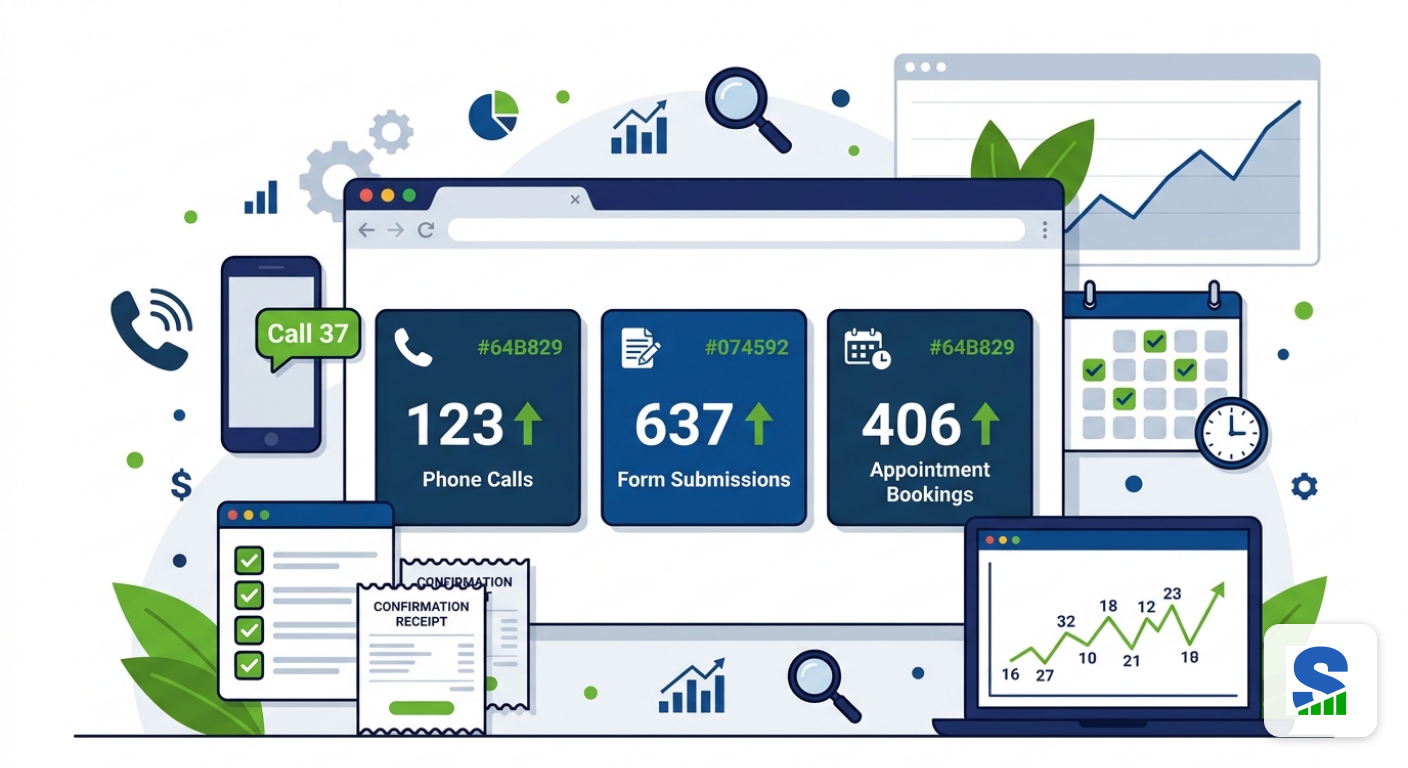
Rank position is a vanity metric compared to what actually keeps a service business running. When we measure whether SEO is working, we look at phone calls, form submissions, and booked jobs tied to organic search traffic. These numbers come from your own site and your own phone system, not from a scraped snapshot of a results page that may or may not reflect reality.
- Phone calls attributed to organic search traffic, not paid ads or referrals
- Form fills and quote requests coming from service pages
- Jobs actually booked and closed, not just leads generated
This is how we measure SEO success with lead generation for every client we work with, because a business owner doesn't get paid in rankings. They get paid in booked jobs.
What to Do If Your Rankings Look Like They Crashed
If your tracker shows a sudden drop, resist the urge to rewrite pages or panic-publish new content. Check Google Search Console for the same date range first, since that data comes directly from Google rather than a third-party scrape. If impressions and clicks held steady while your rank tracker showed a crash, the tool is the problem, not your site.
Give it a few days before drawing conclusions. Most of this kind of disruption resolves on its own within a short window, and tracking tools typically catch back up to reality without any changes needed on your end.
How We Help Phoenix Businesses See Past the Noise
This is exactly the kind of blind spot our Next Gen Search Framework is built to work around, pairing SEO optimization with lead generation tracking so you know whether your phone is actually ringing more, not just whether a dashboard number moved. If your rankings have looked erratic lately and you want a second set of eyes on what's really happening, we offer a free SEO audit and we're happy to walk through your numbers with you.