
manufacturing SEO · Nationwide
Manufacturing SEO Services
More qualified RFQs from engineers and buyers who need exactly what you make. We put your processes, materials, tolerances and certifications in front of the people sourcing a supplier, on Google, in industrial directories and in the AI answers that now help build vendor short lists.
If you found this page by searching, your customers are doing the same thing. Helping them find you is what we do.
- Dozens of 5-star Google reviews
- 20 years ranking businesses
- 200+ active clients
How buyers search
How engineers and buyers actually find a manufacturer
Manufacturing is business to business, and the search is done by someone looking for a capability, not a company name. A design engineer types a process, a material and a tolerance. A purchasing manager looks for a supplier who holds a specific certification and can handle a certain annual volume. Neither of them is browsing. They are building a short list of two or three shops to send an RFQ, and any supplier whose site does not answer the screening questions is dropped without a phone call.
The sales cycle is long and the stakes are high. A new supplier means first article inspection, qualification paperwork and the risk of a line going down if parts arrive late or out of spec, so buyers are cautious and slow to switch. A single new account can run for years, which means a few hundred of the right visitors each month can support a substantial order book. Traffic numbers that would worry a consumer brand are perfectly healthy for a job shop or a contract manufacturer.
Each type of buyer searches on its own terms. Engineers at the prototype stage want quick-turn capability, design for manufacturability help and honest lead times. Sourcing teams moving production want capacity, quality systems and pricing at volume. Distributors and private label brands look for OEM partners in a product category. Aerospace, medical and defense buyers screen on certifications like AS9100, ISO 13485 and ITAR registration before they read anything else on the page. Each of those buyers needs a different page, and one generic capabilities page serves none of them well.
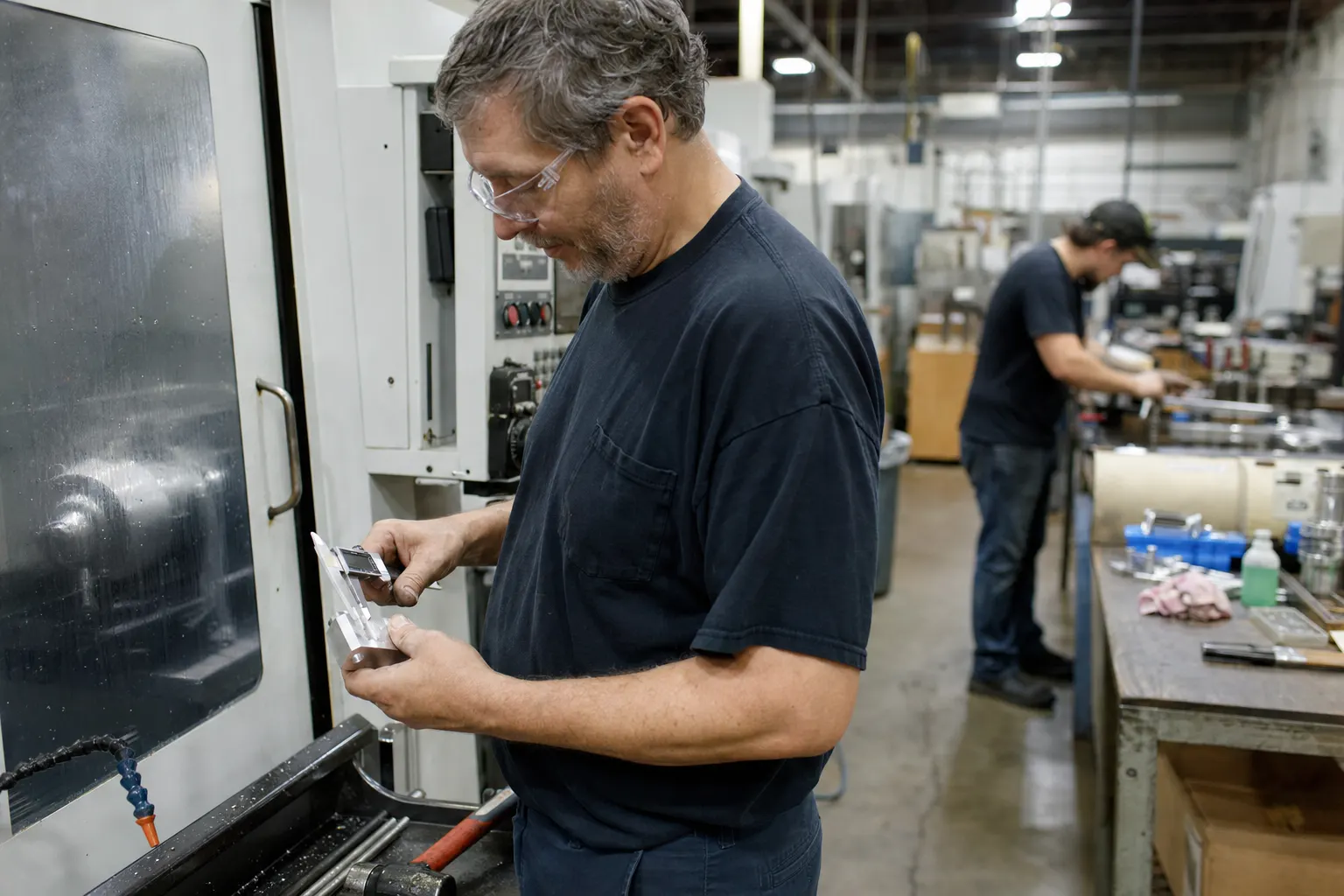
Credibility comes from specifics a buyer can check against a drawing. Equipment lists, materials you run regularly, the tolerances you actually hold, sample parts, industries served, inspection equipment and photographs of your real floor all count. Vague pages that promise quality and precision without numbers read like every other shop on the first page. The manufacturers who win online publish the detail their competitors save for the sales call, and they let the buyer qualify themselves before anyone picks up the phone.
What we do
SEO for manufacturers, everywhere buyers look
Google Maps
The local map pack
Most manufacturing searches do not lean on the map pack the way a plumbing search does, so the role the map plays elsewhere falls to industrial directories and sourcing platforms. Thomasnet, industry association member lists, distributor portals and niche sourcing sites are where buyers assemble supplier lists, and their pages often rank for the same capability terms you want. We get your listings complete and consistent, with accurate processes, certifications, materials and capacities, and we fix the outdated or duplicate profiles that quietly send buyers elsewhere. Your Google Business Profile still matters for buyers who prefer a regional supplier they can visit and audit, so we set it up with real photos of the plant and the right categories. Together, those listings mean a buyer who never reaches your website still finds your shop in the places they already trust.
Organic search
The blue links below the map
Organic search is where most RFQs are won. We build a page for each process you want more of, such as five-axis machining, deep drawing, injection molding or robotic welding, and give it the detail buyers screen on: materials, part size range, tolerances, typical volumes, secondary operations and lead times. Industry pages explain how you serve aerospace, medical, automotive or energy customers and which certifications back that up. Material pages target engineers who start with titanium, PEEK or Inconel rather than a process. We also show the industries and part families each process serves best, so engineers see their own work reflected. We fix the technical issues common on older manufacturer sites, like capability lists buried in PDFs and image-only equipment pages. Authority comes from trade publications, association memberships, supplier and customer relationships and the technical articles engineers actually bookmark and cite.
AI search
AI Overviews, ChatGPT, Gemini
Engineers and buyers now ask AI assistants for lists of suppliers who can do a specific job, such as contract manufacturers for medical device housings or shops that anodize aluminum in a particular region. Those answers draw on industrial directories, trade publications, association lists and supplier pages that state capabilities plainly. We get your company into those sources and make your own pages easy to quote: process, materials, tolerances, certifications, industries served and location, all written as clear sentences rather than buried in images or spec sheets. When an assistant builds a supplier short list for your niche, the goal is that your shop is on it with an accurate description of what you do well. We test the prompts that matter for your capabilities and track how often you appear over time.
Your first 90 days
What happens after you say go
- 1
Month one: capabilities audit
We audit your site, your directory listings and the suppliers who appear when buyers search your processes and materials. We fix technical problems, set up tracking so every RFQ form and quote request is tied to the page it came from, and map each capability, material and industry to the page that should rank for it. With your sales team we identify the work you most want more of, since a shop running near capacity on low-margin parts needs different searches than one with idle machines. We also review your RFQ form, because a form that demands too much loses engineers.
- 2
Month two: capability pages and listings
We publish or rebuild the capability pages behind your most profitable work, with the tolerances, materials, volumes and certifications buyers screen on. Equipment lists and quality pages get turned from PDFs into readable, searchable pages. Directory and association listings are corrected so your capabilities match everywhere a buyer might look. We ask long-standing customers for reviews and testimonials where they are willing, and the first authority links go live through trade publications and partners you already work with. Each capability page gets a drawing upload or quote button, so a ready buyer never has to hunt for the next step.
- 3
Month three: authority and supplier lists
Authority building scales up through technical articles, trade press features and the industry roundups and supplier lists that AI tools reference. We test the sourcing prompts your buyers are likely to use and close gaps in the sources behind the answers. Your monthly report shows rankings by capability, directory visibility and RFQs by page, so you can see which processes are drawing qualified buyers. By the end of the quarter you have a clear plan for the next set of capabilities and industries to target. Pages that draw the wrong kind of inquiry get refocused.
Timing
When manufacturing buyers start looking for a new supplier
Manufacturing demand is less seasonal than event driven. Buyers go looking when something forces a change, and those searches are quiet, specific and easy to miss. The suppliers who already rank are the ones who receive the RFQ.
A supplier lets them down
Late shipments, quality escapes or a shop that closes its doors send buyers searching for a replacement fast. They need a capable supplier within weeks, and they qualify whoever answers their questions online.
Reshoring and dual sourcing
When tariffs, freight costs or supply disruptions push companies to move production or add a second source, sourcing teams research domestic suppliers in earnest. Those projects run for months and begin with search.
New product development
Engineering teams look for prototype and low-volume partners early in a project. A shop that handles the prototype is well placed to win production, so prototyping pages keep paying off after the first order.
Annual sourcing reviews
Yearly supplier reviews and new fiscal budgets prompt buyers to benchmark their vendors. Strong capability pages in place before those reviews put your name on the comparison list instead of the incumbent's alone.
The math
What one new customer is worth to you
A manufacturing account is rarely a single order. Here is example math for a contract machining or fabrication shop. Replace these figures with your own average order size, reorder rate and customer tenure to see what one account from search is worth.
At those numbers, one qualified RFQ that becomes a long-term account justifies years of SEO. That is why we judge the work on quote requests and won accounts from search, and why a modest traffic report can still sit alongside a very good year.
Example math · use your own numbers
- First production order
- $25,000
- Repeat orders, first year
- $75,000
- Annual volume, years two to five
- $400,000
- New part numbers added over time
- $100,000+
- Example lifetime value
- $600,000
Search terms
Searches we target for manufacturers
We choose terms by the buyer behind them. Process, material and tolerance terms bring engineers, certification and capacity terms bring sourcing teams, and industry terms bring buyers from the sectors you want to grow in. Every term is assigned to one page, so two capability pages never compete for the same RFQ.
- CNC machining services
- contract manufacturing companies
- custom metal fabrication
- tight tolerance precision machining
- ISO 13485 contract manufacturer
- AS9100 machine shop
- plastic injection molding companies
- sheet metal fabrication near me
- prototype machining
- private label OEM manufacturer
- aluminum anodizing services
- robotic welding services
Manufacturing SEO questions we hear most
Our traffic is tiny. Does that mean SEO is not working?
Not in this sector. If the right engineers find you and request quotes, a few hundred visitors a month can support a substantial order book. A consumer brand needs crowds; a job shop needs the handful of buyers whose parts fit your machines. We measure this on qualified RFQs and won accounts, not sessions, and we show you which pages those RFQs came from so you can see the work paying off even when the traffic chart looks flat.
What should we actually publish?
The technical specifics buyers screen on: processes you run, materials you handle, tolerances you hold, certifications you carry, part size ranges, typical volumes and lead times. That detail is what engineers search for and what your competitors usually leave off. Equipment lists, inspection capabilities and photographs of representative parts help too. Pages that read like a brochure about quality and service rarely rank, while pages that read like a spec sheet written for people often do.
Is a Thomasnet listing enough, or do we need our own pages to rank?
You need both. Directory listings put you in front of buyers who start their search on those platforms, and their pages rank for many broad terms. But a listing has limited room for the detail that wins a specific RFQ, and buyers almost always check your own site before they send drawings. Your capability pages can also rank for precise process and material combinations that directories never target. We keep the listings accurate and build your own pages to carry the depth.
How do we publish capabilities without exposing customer work?
Most of what buyers need has nothing to do with your customers. Processes, materials, tolerances, equipment and certifications describe your shop, not anyone else's parts. Where examples help, we use generic sample parts, anonymized case descriptions or parts you make for your own catalog, and nothing goes live without your approval. Many shops under NDA still publish rich capability pages; they simply describe the type of work rather than the customer or the drawing.
Should we target industries or processes first?
Usually processes, then industries. Engineers most often start with how a part is made, so capability pages tend to bring the first RFQs. Industry pages become valuable when you hold the certifications or experience a sector demands, such as medical or aerospace, because buyers in those fields screen for proof. We look at where your margins are best and where the competition is thinnest, then decide the order together with your sales team.
Do engineers really read technical articles from a manufacturer?
They do when the article solves a problem they have today. Design guides on wall thickness for molded parts, tolerance stack-ups, material selection or how to reduce machining cost get bookmarked and shared inside engineering teams. Those articles also earn links from forums, universities and trade sites, which lifts your capability pages. Generic posts about the importance of quality do none of that, so we write fewer, more useful pieces with input from your engineers.
How do AI tools decide which suppliers to list?
They lean on sources that look authoritative and specific: industrial directories, association member lists, trade publications and supplier pages that state capabilities in plain language. A shop described consistently across those places, with clear pages listing processes, materials, certifications and location, is far more likely to be named. We build that footprint deliberately and test sourcing prompts in your niche to see when you appear and what the assistant says about you.
How long before SEO produces RFQs?
Niche capability terms with little competition can start bringing inquiries within a few months, especially once directory listings are corrected. Broader terms like contract manufacturing or CNC machining services take longer and depend on how much authority your site already carries. Because sales cycles run long, an RFQ that arrives in month four may not become an order until month nine, so we track inquiries and quotes alongside closed business to give the program a fair reading.
Related industries we rank
manufacturing SEO
See where you stand before your competitors do
Get a free audit of your site and map listing, with a clear plan for turning more manufacturing searches into booked work.
Get Your Free SEO AuditFree audit, no contracts.